
Update2026.06.06 (토)

 강경호 기자
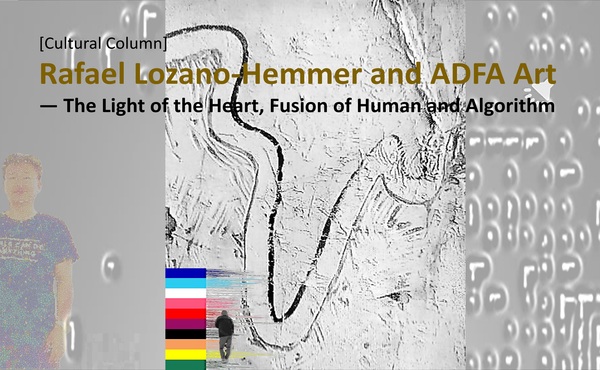 ▲ Kang Gyeongho, Untitled-6-1, ADFA, 2026
[문화칼럼] 심장의 빛, 인간과 알고리즘의 융합 — 라파엘 로사노-헤머와 ADFA 예술
- 강경호, ADFA 아티스트|2026년 5월 22일
라파엘 로사노-헤머(Rafael Lozano-Hemmer, 국내 표기: 로자노-헤머) 예술은 인간의 생체 리듬과 디지털 알고리즘이 교차하는 지점에서 새로운 미학을 창조한다. 이는 ADFA(Analog-Digital Fusion Art, 아날로그-디지털 융합 예술) 철학의 핵심과 맞닿아 있으며, 기술이 인간성을 소멸시키는 것이 아니라 오히려 확장하는 매개체가 될 수 있음을 보여준다.
대표작 Pulse Room은 관람객의 심장 박동을 센서로 측정해 수백 개의 전구 점멸로 변환한다. 개인의 리듬은 알고리즘을 통해 공동의 빛으로 확산되며 이는 개인의 데이터가 집단적 경험으로 전환되는 과정을 상징한다. 이어서 Voice Tunnel은 관객의 목소리를 빛과 소리의 파동으로 변환해 터널 전체를 채운다. 목소리의 울림은 사회적 연대의 은유로 공동체적 공간을 형성한다.
로사노-헤머의 작업은 관람객의 참여 없이는 완성되지 않는다. 그는 관람객을 수동적 감상자가 아닌 작품의 공동 창조자로 위치시킨다. ‘Relational Architecture’ 프로젝트에서는 도시의 공공장소가 대형 스크린으로 변모하고 사람들의 움직임과 생체 정보가 집단적 표현으로 확장된다. 이는 ADFA 철학의 “참여적 공존”을 실질적으로 구현하는 사례다.
ADFA는 디지털 질서 속에서 아날로그적 감성이 어떻게 공존할 수 있는지를 묻는다. 로자노-헤머의 작업은 이에 대한 답을 두 가지 측면에서 보여준다. 하나는 알고리즘을 인간을 통제하는 장치가 아니라 심장의 박동과 호흡을 기록하고 시각화하는 따뜻한 매개체로 기능하게 함으로써 기계와 인간의 조화를 드러내는 것이고, 다른 하나는 데이터로 연결된 타인의 생체 리듬을 통해 관람객이 현대 사회의 단절을 넘어 정서적 교감과 공동체적 유대를 경험하게 함으로써 예술적 소통을 실현하는 것이다.
여기에 철학적 성찰을 더하자면, 로자노-헤머의 예술은 기술적 상호작용을 넘어 인간 존재의 본질을 탐구한다. 심장 박동이라는 생명의 근원적 리듬과 타인과의 관계를 여는 목소리는 그의 작품 속에서 알고리즘과 융합된다. 이를 통해 그는 기술이 인간을 지배하는 도구가 아니라, 인간성을 투영하는 거울이 될 수 있음을 증명한다. 결과적으로 이는 ADFA(Analog-Digital Fusion Art)가 단순한 예술적 실험을 넘어, 기술의 사회적 책임과 인간 존재의 본질을 성찰하는 새로운 문화적 패러다임임을 보여준다.
알파벳과 코드가 범람하는 시대에 로자노-헤머의 예술은 중요한 통찰을 던진다. 첨단 알고리즘이라 할지라도 그 뿌리와 지향점이 인간의 생명력과 맞닿아 있을 때 깊은 예술적 울림을 줄 수 있음을 증명한다. 기술은 인간성을 지우는 것이 아니라 인간과 예술을 새롭게 융합하는 캔버스가 된다.
그의 프로젝트들은 ADFA(Analog-Digital Fusion Art) 철학의 사회적 확장 가능성을 보여준다. Pulse Room은 개인의 리듬을 집단적 빛으로, Voice Tunnel은 목소리를 사회적 공간으로, 관계적 건축은 도시를 공동체적 무대로 변모시킨다. 이는 ADFA가 예술적 실험을 넘어 기술과 사회적 책임의 교차점에서 새로운 문화적 패러다임을 제시할 수 있음을 시사한다.
[필자 해설]
이 글은 라파엘 로자노-헤머의 작업을 ADFA(Analog-Digital Fusion Art) 철학의 관점에서 해석한 비평적 칼럼이며, 작가의 공식 입장이 아님을 밝힌다. 작품 설명은 저작권을 존중하는 범위 내에서 이루어졌으며, 독자에게 혼동을 주지 않도록 학술적 맥락에서 서술하였다.
#ADFA예술 #라파엘로사노헤머 #디지털과아날로그 #관계적건축 #예술철학
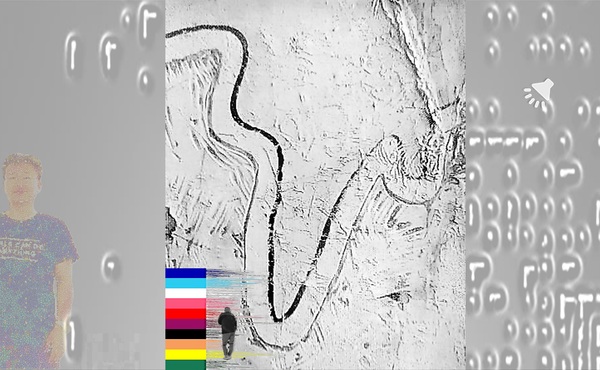 ▲ Kang Gyeongho, Untitled-6-1, ADFA, 2026
[Cultural Column]
Heart’s Light: The Fusion of Human and Algorithm — Rafael Lozano-Hemmer and ADFA Art |
Kang Gyeongho, ADFA Artist|May 22, 2026
Rafael Lozano-Hemmer’s art emerges at the intersection of human biological rhythms and digital algorithms, creating a new aesthetic language. This approach resonates with the philosophy of ADFA (Analog-Digital Fusion Art), which insists that technology does not erase humanity but rather extends it as a medium of expression.
His celebrated work Pulse Room measures the heartbeat of visitors through sensors and translates it into the flickering of hundreds of light bulbs. An individual rhythm becomes a collective illumination, symbolizing the transformation of personal data into shared experience. In Voice Tunnel, the voices of participants are converted into waves of light and sound that fill an entire tunnel, turning vocal resonance into a metaphor of social solidarity and communal space.
Lozano-Hemmer’s projects cannot be completed without active participation. He positions the audience not as passive spectators but as co-creators of the artwork. In his Relational Architecture series, public spaces are transformed into large-scale interactive screens where the movements and biometric signals of citizens expand into collective expressions. This is a vivid realization of ADFA’s principle of “participatory coexistence.”
ADFA asks how analog sensibility can coexist within digital order. Lozano-Hemmer’s work offers two answers. First, algorithms are not instruments of control but warm mediators that record and visualize the breath and heartbeat, revealing harmony between machine and human. Second, through data-linked rhythms of others, visitors experience emotional connection and communal bonds that transcend the fragmentation of modern society, achieving artistic communication.
Philosophically, Lozano-Hemmer’s art goes beyond technological interaction to explore the essence of human existence. The heartbeat, the primal rhythm of life, and the voice, which opens us to others, are fused with algorithms in his works. Through this fusion, he shows that technology is not a tool of domination but a mirror that reflects humanity. Thus, ADFA (Analog-Digital Fusion Art) emerges as more than artistic experimentation; it becomes a new cultural paradigm that contemplates technology’s social responsibility and the essence of human existence.
In an era saturated with alphabets and codes, Lozano-Hemmer’s art provides crucial insight. Even advanced algorithms, when rooted in human vitality, can generate profound artistic resonance. Technology becomes not a force of erasure but a canvas where humanity and art are newly fused.
His projects demonstrate the social expansion of ADFA philosophy. Pulse Room transforms individual rhythm into collective light, Voice Tunnel turns voices into social space, and Relational Architecture reshapes the city into a communal stage. Together, they suggest that ADFA is more than artistic experimentation; it is a cultural paradigm at the intersection of technology and social responsibility.
[Author’s Note] This column interprets Rafael Lozano-Hemmer’s works through the lens of ADFA philosophy as a critical essay. It does not represent the artist’s official position. Descriptions of artworks are provided within the bounds of copyright respect, and the analysis is presented in an academic context to avoid reader confusion.
#ADFAArt #RafaelLozanoHemmer #DigitalAndAnalog #RelationalArchitecture #ArtPhilosophy
다른 곳에 퍼가실 때는 아래 고유 링크 주소를 출처로 사용해주세요.
 http://www.newsbusan.com/news/view.php?idx=16615

뉴스부산(NEWSBUSAN.COM)은 시민과 함께 호흡하며, 지역의 삶과 문화 속에서 부산의 미래를 그려가는 ‘사상과 정보의 열린 플랫폼’을 지향합니다.
NEWSBUSAN.COM aims to be an open platform of thought and information, breathing with citizens and envisioning the future of Busan through the life and culture of the region.
 BTS 팬 위한 부산 웰컴센터 개소
 롯데백화점 센텀시티, 3일부터 정상 영업
 지방공무원 여성 비율 첫 과반 돌파, 휴직도 증가
 [문화칼럼] ADFA 시대의 창작과 성찰
- 강경호, ADFA 아티스트|2026년 5월 30일 | AI 시대에 창작의 주체와 권리 문제는 기술 담론을 넘어 예술의 본질을 다시 묻는 계기로 다가왔다. 우리는 이제 “창작이란 무엇이며 그 중심은 어디에 있는가”라는 근본적 질문 앞에 서 있다. ADFA(Analog-Digital Fusion Art)는 이러한 물음에 대한 응답으로 제안된 개념...
[문화칼럼] ADFA 시대의 창작과 성찰
[문화칼럼] ADFA 시대의 창작과 성찰- 강경호, ADFA 아티스트|2026년 5월 30일 | AI 시대에 창작의 주체와 권리 문제는 기술 담론을 넘어 예술의 본질을 다시 묻는 계기로 다가왔다. 우리는 이제 “창작이란 무엇이며 그 중심은 어디에 있는가”라는 근본적 질문 앞에 서 있다. ADFA(Analog-Digital Fusion Art)는 이러한 물음에 대한 응답으로 제안된 개념...
 [초대석] Warming-up · 최지원 · Jiwon Choi
https://youtu.be/C1sWALU5vmE?si=XOg8nJ3Zk4I_4t1EWarming-up · 최지원 · Jiwon ChoiMusic For Ballet Class Vol.8 By Jiwon Choi뉴스부산은 문화를 담습니다 www.newsbusan.com
[초대석] Warming-up · 최지원 · Jiwon Choi
https://youtu.be/C1sWALU5vmE?si=XOg8nJ3Zk4I_4t1EWarming-up · 최지원 · Jiwon ChoiMusic For Ballet Class Vol.8 By Jiwon Choi뉴스부산은 문화를 담습니다 www.newsbusan.com
 찻잔 (Teacup) Line Dance | 초급 | 쉽고 신나요
https://youtu.be/6WJaeSTKYUICount:32Wall:4Level:BeginnerChoreographer:Eun Hee Yoon (KOR)Music: #찻잔 - Akdong Club#강성자라인댄스With #KLSF부산지부장#부산사하구 #괴정역6번출구문화를 담습니다 뉴스부산 | http://newsbusan.com
찻잔 (Teacup) Line Dance | 초급 | 쉽고 신나요
https://youtu.be/6WJaeSTKYUICount:32Wall:4Level:BeginnerChoreographer:Eun Hee Yoon (KOR)Music: #찻잔 - Akdong Club#강성자라인댄스With #KLSF부산지부장#부산사하구 #괴정역6번출구문화를 담습니다 뉴스부산 | http://newsbusan.com
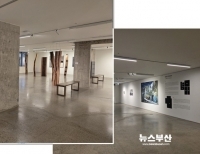 도모헌, 부산 정체성 탐구 특별전 ‘Art Accent: Prologue’
[뉴스부산] 부산 수영구 도모헌에서 특별전 ‘Art Accent: Prologue’가 6월 21일까지 진행된다. 지난 9일부터 선보이고 있는 이번 전시는 부산의 역사와 현재, 미래를 예술적으로 탐구한다.참여 작가는 #김서량, #김원진, #박영환, #이태수, #허찬미 등 5인으로, 각자의 시선으로 도시와 공간, 시간의 층위를 표현한다. 김서량은 부산항의 풍경과 소리...
도모헌, 부산 정체성 탐구 특별전 ‘Art Accent: Prologue’
[뉴스부산] 부산 수영구 도모헌에서 특별전 ‘Art Accent: Prologue’가 6월 21일까지 진행된다. 지난 9일부터 선보이고 있는 이번 전시는 부산의 역사와 현재, 미래를 예술적으로 탐구한다.참여 작가는 #김서량, #김원진, #박영환, #이태수, #허찬미 등 5인으로, 각자의 시선으로 도시와 공간, 시간의 층위를 표현한다. 김서량은 부산항의 풍경과 소리...
 ADFA(Analog-Digital Fusion Art, 아날로그-디지털 융합 예술)
강경호, ADFA 아티스트|2026년 5월 22일ADFA(Analog-Digital Fusion Art, 아날로그-디지털 융합 예술)는 인간의 생체 리듬과 디지털 알고리즘이 교차하는 지점에서 새로운 미학을 창조하는 예술적 패러다임이다. 기술은 인간성을 소멸시키는 것이 아니라 확장하는 매개체가 될 수 있음을 보여주며, 포...
ADFA(Analog-Digital Fusion Art, 아날로그-디지털 융합 예술)
ADFA(Analog-Digital Fusion Art, 아날로그-디지털 융합 예술)강경호, ADFA 아티스트|2026년 5월 22일ADFA(Analog-Digital Fusion Art, 아날로그-디지털 융합 예술)는 인간의 생체 리듬과 디지털 알고리즘이 교차하는 지점에서 새로운 미학을 창조하는 예술적 패러다임이다. 기술은 인간성을 소멸시키는 것이 아니라 확장하는 매개체가 될 수 있음을 보여주며, 포...
 로사노-헤머와 ADFA(Analog-Digital Fusion Art) 예술
[문화칼럼] 심장의 빛, 인간과 알고리즘의 융합 — 라파엘 로자노-헤머와 ADFA 예술- 강경호, ADFA 아티스트|2026년 5월 22일. 라파엘 로사노-헤머(Rafael Lozano-Hemmer, 국내 표기: 로자노-헤머) 예술은 인간의 생체 리듬과 디지털 알고리즘이 교차하는 지점에서 새로운 미학을 창조한다. 이는 ADFA(Analog-Digital Fusion Art, 아날로그-디지털 융합 예술) 철학...
로사노-헤머와 ADFA(Analog-Digital Fusion Art) 예술
[문화칼럼] 심장의 빛, 인간과 알고리즘의 융합 — 라파엘 로자노-헤머와 ADFA 예술- 강경호, ADFA 아티스트|2026년 5월 22일. 라파엘 로사노-헤머(Rafael Lozano-Hemmer, 국내 표기: 로자노-헤머) 예술은 인간의 생체 리듬과 디지털 알고리즘이 교차하는 지점에서 새로운 미학을 창조한다. 이는 ADFA(Analog-Digital Fusion Art, 아날로그-디지털 융합 예술) 철학...
 잭 리버먼과 ADFA(Analog-Digital Fusion Art) 예술
[문화칼럼] 잭 리버먼과 ADFA 예술 — 알고리즘의 시, 데이터로 그리는 세계 | 강경호, ADFA 아티스트|2026년 5월 20일ADFA(Analog-Digital Fusion Art) 예술을 탐구하는 연작 칼럼은 ‘데이터’라는 공통 언어를 통해 이어진다. 앞선 글에서 레픽 아나돌은 집합적 기억을 꿈처럼 시각화하며 아날로그와 픽셀의 융합을 보여주었다. 이번 칼럼에서는 Zach Li...
잭 리버먼과 ADFA(Analog-Digital Fusion Art) 예술
[문화칼럼] 잭 리버먼과 ADFA 예술 — 알고리즘의 시, 데이터로 그리는 세계 | 강경호, ADFA 아티스트|2026년 5월 20일ADFA(Analog-Digital Fusion Art) 예술을 탐구하는 연작 칼럼은 ‘데이터’라는 공통 언어를 통해 이어진다. 앞선 글에서 레픽 아나돌은 집합적 기억을 꿈처럼 시각화하며 아날로그와 픽셀의 융합을 보여주었다. 이번 칼럼에서는 Zach Li...
 [문화칼럼] 레픽 아나돌과 ADFA 예술
[문화칼럼] 레픽 아나돌과 ADFA(Analog-Digital Fusion Art) 예술 — 데이터의 꿈, 아날로그와 픽셀의 융합 강경호, ADFA 아티스트|2026년 5월 19일. 터키계 미국인 아티스트 레픽 아나돌은 데이터와 알고리즘을 새로운 아날로그와 붓질로 제시하며, ADFA(Analog Digital Fusion Art) 철학을 가장 직접적으로 구현한다. 그의 작업은 Machine Hallucinations의 몰입형 ...
[문화칼럼] 레픽 아나돌과 ADFA 예술
[문화칼럼] 레픽 아나돌과 ADFA(Analog-Digital Fusion Art) 예술 — 데이터의 꿈, 아날로그와 픽셀의 융합 강경호, ADFA 아티스트|2026년 5월 19일. 터키계 미국인 아티스트 레픽 아나돌은 데이터와 알고리즘을 새로운 아날로그와 붓질로 제시하며, ADFA(Analog Digital Fusion Art) 철학을 가장 직접적으로 구현한다. 그의 작업은 Machine Hallucinations의 몰입형 ...


